
ABA Compliance & Internal Risk Audits
· Roberts Investigative Services
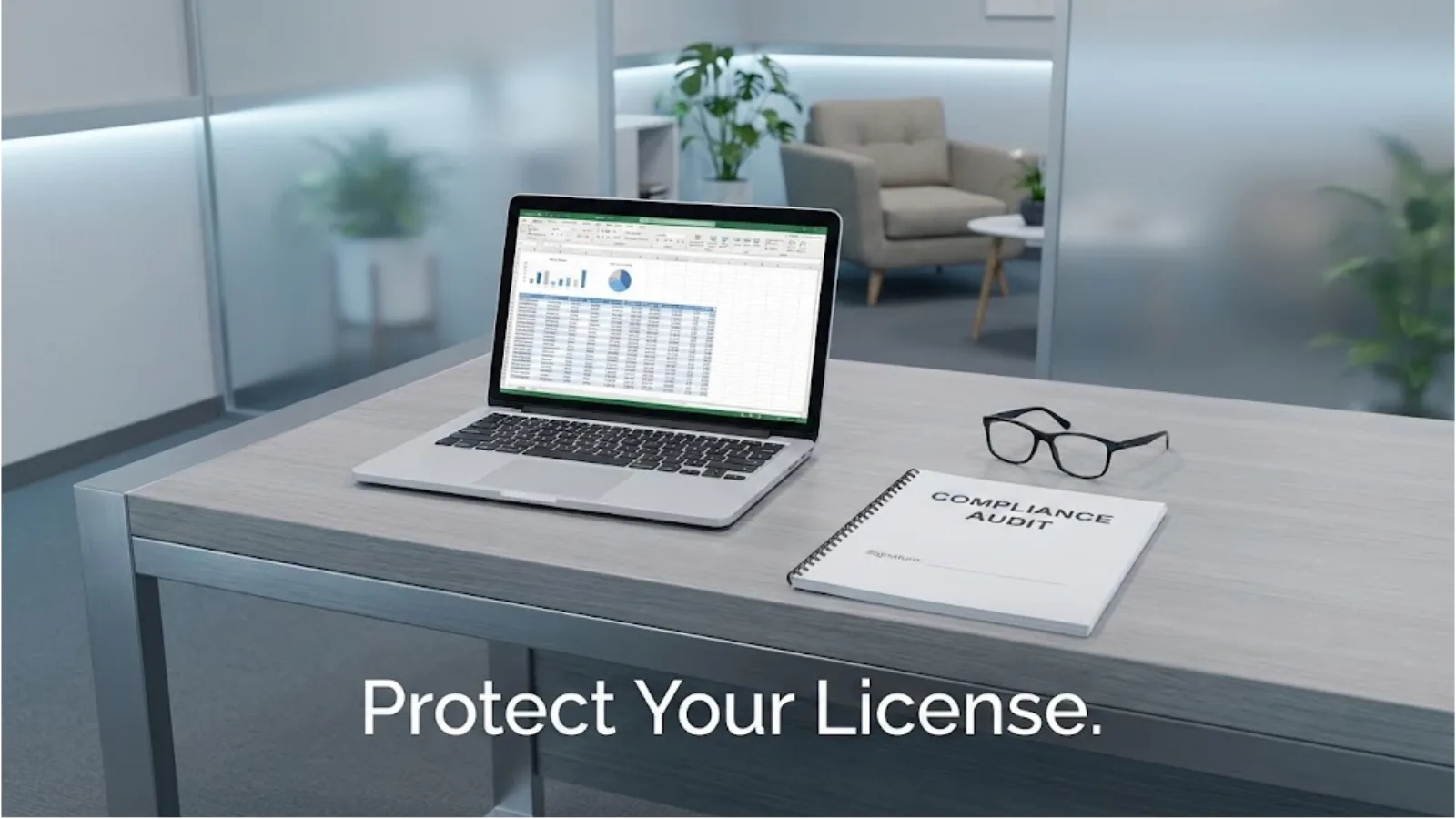
Internal Review Before a Regulator Asks the Question
Trust and supervision are not substitutes for records that reconcile services delivered, clinical documentation and claims submitted.
Why an Independent Review May Help
The rapid expansion of insurance mandates for autism services has led to a corresponding increase in fraud scrutiny. Federal bodies, including the Office of Inspector General (OIG), have aggressively targeted providers for billing irregularities.
For an agency director, the risk may include billing for services not documented, overlapping service times, inconsistent records or coding that does not match the underlying work. Roberts Investigative Services can investigate factual discrepancies; healthcare counsel and qualified billing professionals should interpret regulatory and reimbursement requirements.
Forensic Billing & Compliance Methodology
The review begins with a defined question and authorized records. We compare timelines, documentation and available source information, then report discrepancies without deciding that an error was intentional or legally actionable.
- Forensic billing comparison: Billing logs, clinical session notes and verification data (GPS or EVV timestamps, where the agency collects it) are compared against one another. The output is a list of entries that do not reconcile, with the source of each discrepancy identified.
- Field compliance verification: For services delivered in public or community settings, direct observation can document whether a session occurred, how long it ran and whether the assigned staff member was present.
- Personnel history review: Beyond a criminal record check, employment history, licensure status and prior regulatory action are lawful, job-relevant records for a provider making a supervision decision.
What the comparison usually surfaces
Most discrepancies in an ABA practice are not fraud. They are documentation drift: a session that ran short but was billed at the authorized unit, a note completed from memory three days later, a supervision hour recorded against the wrong client, a staff member who left at 4:40 on a session logged to 5:00. None of that is a conclusion about intent — and an investigator is not the person who decides whether it crosses a legal line.
What an independent comparison does is give a director a factual answer to a narrow question: do the records reconcile, and where specifically do they not? That answer is more useful before a payer asks than after.
Where the review stops
An investigator can establish what the records show and what an observer saw. An investigator cannot determine whether a billing practice violates a Medicaid rule, whether a coding choice was permissible, or whether a discrepancy is material to a payer. Those are questions for healthcare counsel and a qualified billing or coding professional. Reports are written so that each of those readers can see the underlying facts without having to accept an investigator's opinion on a question outside the discipline.
Working through counsel
When litigation, a payer audit or a regulatory inquiry is anticipated, ask counsel whether the investigator should be engaged through the law firm rather than directly by the agency. Work-product protection depends on the relationship, the purpose of the engagement and the jurisdiction — retaining an investigator through counsel does not automatically render every resulting document non-discoverable, and no investigator should tell you otherwise.
The practical reason to route it through counsel is narrower and more reliable: counsel decides what to do with an unfavorable finding, and that decision is easier to make when the finding arrives as legal advice rather than as an operational report already circulating internally.
Before you commission a review
Three things make an internal review faster and cheaper:
- A defined question. "Do our June session notes reconcile with our June claims for these four clients?" is answerable. "Are we compliant?" is not.
- Authorization in writing. Records access, staff observation and personnel review each need clear authority from someone who can grant it.
- A decision already identified. Knowing in advance what you would do with a negative finding — self-report, retrain, terminate, disclose to counsel — keeps the review scoped to what you will actually act on.
Compliance FAQs for Providers
What triggers a Medicaid or insurance fraud audit?
Can I legally monitor staff in community settings?
Discuss an internal review
Bring the date range, the clients or staff in question, the records you can authorize access to and the decision you are trying to make. We will explain what can be compared, what cannot, and where a billing or legal professional needs to take over.
Call: +1-888-772-7894
Related to this, we handle autism-informed investigative support, an independent internal investigation and providers on the Treasure Coast.
Private · No Obligation
Find out whether an investigation can help.
Describe the question you need answered. A licensed investigator will explain what can be done legally, what information would help and what the likely scope will be.